You can spend eight hours in bed and still wake up feeling like you barely slept. Sometimes the problem isn't how long you sleep. It's what happens to your breathing after you drift off.
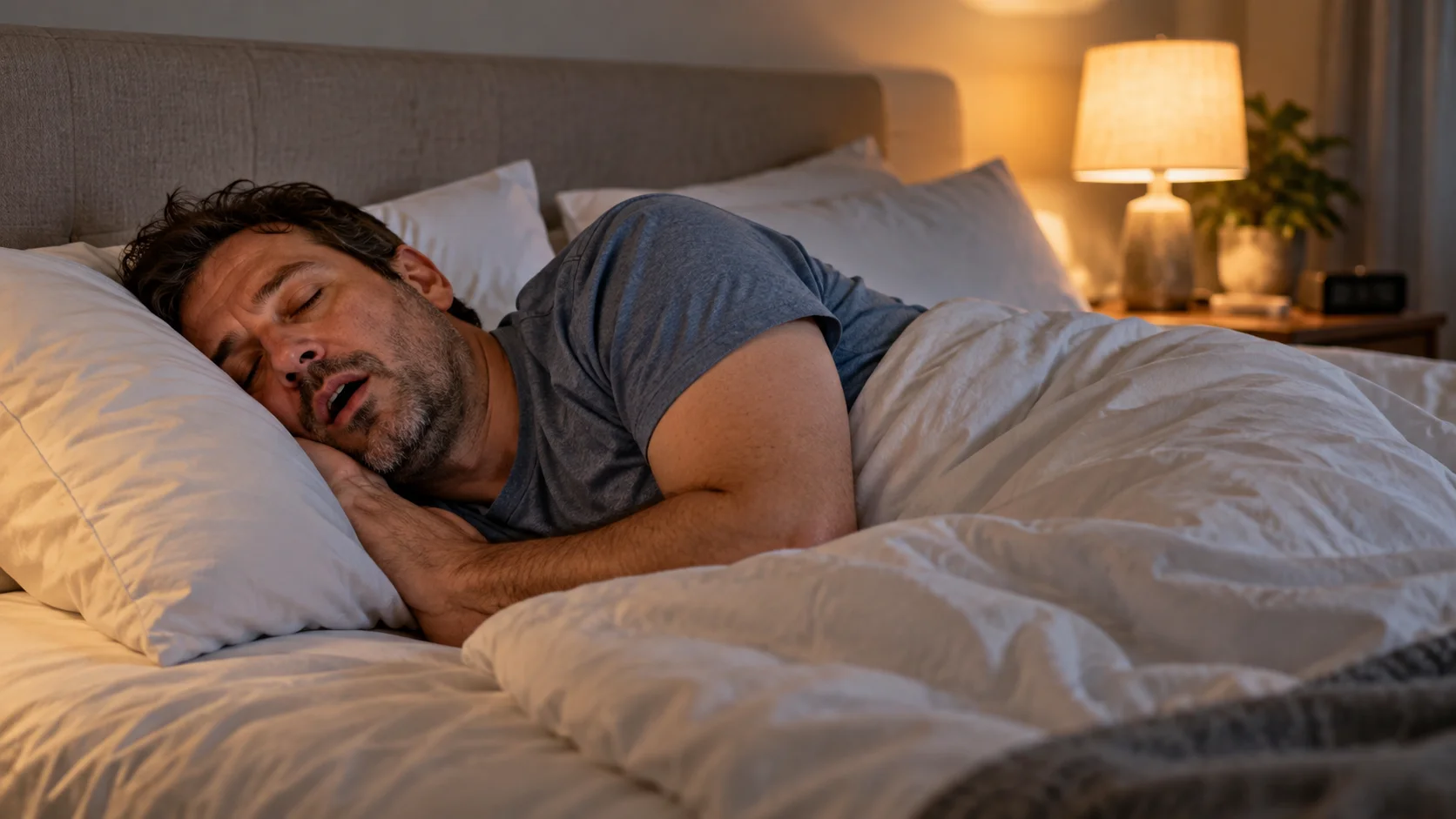
Obstructive sleep apnea (OSA) causes repeated narrowing or blockage of the upper airway during sleep. Loud snoring is a familiar clue, but it isn't the whole story. Morning headaches, frequent bathroom trips and trouble concentrating can also point to a sleep problem worth checking.
Common clues: Loud snoring, witnessed pauses in breathing, gasping and persistent daytime sleepiness.
Often overlooked: Morning headaches, dry mouth, nighttime urination and insomnia, especially among women.
Next step: A clinician can assess your risk and recommend an appropriate sleep study; symptoms or a smartwatch alone cannot confirm a diagnosis.
What Are the Most Common Sleep Apnea Symptoms?
Sleep apnea symptoms can occur during the night or appear the next morning. The National Heart, Lung, and Blood Institute (NHLBI) identifies the following as common warning signs:
- Loud, frequent snoring: Often reported by a partner, although not everyone who snores has sleep apnea.
- Pauses in breathing: Someone may notice that you seem to stop breathing, then start again.
- Gasping or choking: You might wake suddenly trying to catch your breath.
- Daytime sleepiness: You may struggle to stay alert during meetings, conversations or routine activities.
- Morning dry mouth or headaches: These symptoms can happen after a disrupted night, but also have other possible causes.
- Repeated awakenings: You might wake often to use the bathroom or find it hard to stay asleep.
None of these signs proves that you have OSA. But a pattern of several symptoms—particularly breathing pauses with daytime sleepiness—deserves a conversation with a healthcare professional.
The Warning Signs People Often Miss
You're tired even after a full night in bed
Feeling exhausted despite enough time in bed can suggest that your sleep is repeatedly interrupted. People with OSA may experience brief awakenings they don't remember. These interruptions can make sleep less refreshing. To understand another aspect of nighttime rest, read our guide to REM sleep and how much you need.
Still, fatigue alone is not specific to sleep apnea. Poor sleep habits, medications, low mood, anemia and thyroid problems are among other possible explanations. Our article on early hypothyroidism symptoms explains one possible cause of persistent fatigue. A medical evaluation helps sort them out.
You wake up with headaches or a dry mouth
Some people notice a headache shortly after waking or a dry, uncomfortable mouth. These symptoms appear on the NHLBI's list of possible sleep apnea signs, but neither reliably identifies the condition by itself. Mouth breathing, dehydration and other issues can cause similar complaints.
You keep getting up to use the bathroom
Nighttime urination, also called nocturia, is another possible clue. In plain English, it means repeatedly waking to pee. It can happen for many reasons, including drinking fluids late, bladder conditions and medication effects. If it occurs alongside snoring or gasping, mention the whole pattern to your clinician.
Your attention, memory or mood seems off
Fragmented sleep can leave you less alert the next day. You might reread the same paragraph, feel unusually irritable or have trouble reacting quickly. These changes aren't unique to OSA, but they're important when they persist.
Why Sleep Apnea Can Look Different in Women
Not everyone fits the familiar picture of a man who snores loudly. According to the NHLBI's guidance on sleep apnea in women, women may report tiredness, insomnia, morning headaches, anxiety, depression or frequent awakenings. Snoring may be less prominent or go unreported.
These complaints overlap with many common conditions, which can make the breathing problem less obvious. Risk may also increase during and after menopause, and pregnancy can change breathing during sleep. For background on changes during this life stage, see our menopause and hormone therapy overview. If your main complaint is unrefreshing sleep rather than snoring, don't assume OSA is impossible.
What Actually Happens When You Stop Breathing in Your Sleep?
While you sleep, muscles in your throat relax. In obstructive sleep apnea, the airway can become too narrow or briefly close. Airflow falls or stops even though your body is still trying to breathe. Your brain then triggers a brief arousal so the airway can reopen.
Think of breathing through a soft straw that keeps pinching shut. Each reopening may be short enough that you never remember waking. But repeated interruptions can affect sleep quality and cause oxygen levels to dip.
Central sleep apnea is different: the brain temporarily fails to send the usual breathing signal. Distinguishing these forms matters because the causes and medical approaches can differ. A proper sleep evaluation can help identify which type is present.
Who Is More Likely to Have Sleep Apnea?
Anyone can develop OSA, including people who aren't overweight. Factors that can increase risk include older age, excess body weight, certain jaw or airway features, family history and alcohol use. Smoking may also contribute to risk. Some medicines, particularly opioids, are linked to other forms of sleep-related breathing problems.
Risk factors aren't a diagnosis. A person without obvious risk factors can still need testing if the symptoms fit.
What Does the Medical Evidence Show?
Clinical guidance offers stronger answers about testing and symptom management than it does about predicting a diagnosis from a single symptom. The following table separates the evidence by question.
| Evidence level | What research suggests | What it means for you |
|---|---|---|
| Strong clinical guideline recommendation (AASM, 2017) | Questionnaires and symptoms alone should not diagnose OSA. Appropriate home testing or in-lab polysomnography is needed. | Ask about objective testing rather than relying on an online quiz. |
| Strong clinical guideline recommendation (AASM, 2017) | A negative, unclear or technically inadequate home test should be followed by in-lab testing when OSA remains a concern. | A single home test may miss a clinically important problem. |
| Randomized-trial evidence summarized in an AASM guideline (2019) | Positive airway pressure improves excessive sleepiness in adults with OSA; trials also support better sleep-related quality of life. | For diagnosed OSA, effective medical management may improve how you feel during the day. |
| Observational associations described by NHLBI | Sleep apnea is linked to higher risk of high blood pressure and cardiovascular problems. | These links warrant attention, but do not prove that OSA caused an individual's illness or that therapy removes every risk. |
Sources: AASM diagnostic guideline; AASM positive airway pressure guideline; NHLBI risk factors and research overview.
Home Sleep Apnea Test vs. Sleep Lab: Which Do You Need?
A home sleep apnea test records breathing-related signals while you sleep in your own bed. For adults without complicating medical conditions who are likely to have moderate to severe obstructive sleep apnea, it can be an appropriate first test when ordered and interpreted through a healthcare professional.
An overnight sleep study in a lab, called polysomnography, monitors more signals. It can help when the diagnosis is uncertain or other sleep disorders may be involved. The American Academy of Sleep Medicine (AASM) recommends lab-based testing instead of home testing in certain situations, including significant heart or lung disease, suspected breathing weakness, a history of stroke, long-term opioid use or severe insomnia.
Important: A negative home test doesn't always end the investigation. If your clinician still suspects OSA, an in-lab study may be the right next step.
Can a smartwatch detect sleep apnea?
A wearable may flag patterns that suggest elevated risk. But in a 2025 health advisory, the AASM cautioned that sleep apps and consumer devices cannot diagnose sleep apnea or reliably rule it out, even when some features have FDA clearance for screening. Treat a watch alert as a reason to talk with a clinician—not as a final answer.
What Happens if Sleep Apnea Goes Unchecked?
Untreated breathing problems during sleep can affect alertness and daily functioning. Feeling sleepy behind the wheel is an immediate concern: if you're struggling to stay awake, avoid driving until you've received medical advice and your sleepiness is addressed.
Over the longer term, observational research has linked OSA with conditions such as high blood pressure, heart disease and stroke. These studies cannot always separate the effects of sleep apnea from age, weight and other health factors. They support getting evaluated, not making predictions about your individual future. Our guide to high blood pressure and why it often goes undetected covers another reason routine health checks matter.
Seek emergency help for severe breathing difficulty while awake, new chest pain, fainting or symptoms of stroke. Those are not problems to assess with a home sleep test.
What Can Help After a Diagnosis?
Treatment depends on your results, symptoms, other medical conditions and preferences. Continuous positive airway pressure (CPAP) uses a gentle stream of air through a mask to keep the airway open. Strong clinical guideline recommendations support positive airway pressure for adults with OSA and excessive daytime sleepiness. Other options include custom oral appliances, selected procedures and lifestyle changes.
Sleeping on your side, limiting alcohol near bedtime, regular activity and weight management when appropriate may help some people. For general, sustainable approaches to weight management, read our science-backed weight management guide. None should replace a recommended medical treatment without discussing the change with your clinician. Likewise, sleep supplements aimed at relaxation should not be mistaken for therapies that keep an obstructed airway open.
There's also a newer option for a specific group. In December 2024, the FDA approved tirzepatide (Zepbound) for adults with obesity and moderate to severe OSA alongside a reduced-calorie diet and increased physical activity. That approval doesn't make it the right choice for everyone. Its prescription status, eligibility requirements and potential adverse effects mean a clinician must evaluate whether it's appropriate.
For a detailed overview of the available approaches, see the NHLBI's sleep apnea treatment resource.
When Should You Talk to a Doctor?
Make an appointment if someone has noticed breathing pauses, you wake gasping, you snore loudly and feel tired during the day, or your sleep remains unrefreshing for weeks. Bring notes about your sleep schedule, medications, alcohol use, headaches and nighttime awakenings. If a partner has noticed pauses, that observation may help.
A clinician may ask about your medical history and suggest a home test or an in-lab study. You don't need to diagnose yourself before scheduling the conversation.
Frequently Asked Questions
Can you have sleep apnea without snoring?
Yes. Snoring is common, but it isn't required. Some people, particularly women, report fatigue, insomnia or morning headaches rather than obvious loud snoring.
What are the first signs of sleep apnea?
Common clues include loud snoring, witnessed breathing pauses, gasping during sleep and persistent daytime sleepiness. Morning dry mouth, headaches and frequent awakenings can also occur.
Can sleep apnea make you tired all day?
Yes. Repeated breathing-related interruptions can leave sleep less refreshing. But daytime fatigue also has many other causes, so a medical assessment is important.
Is a home sleep apnea test accurate?
It can help diagnose OSA in appropriately selected adults. It isn't ideal for everyone, and a negative or inconclusive result may require a full overnight sleep study.
Can a smartwatch tell if you have sleep apnea?
No. Some devices assess risk, but they cannot make or rule out a medical diagnosis. A clinician can decide whether formal testing is appropriate.
Does sleep apnea happen in people who aren't overweight?
Yes. Body weight is one risk factor, not a requirement. Airway shape, age, family history and other factors also matter.
Does everyone with sleep apnea need a CPAP machine?
No. Positive airway pressure is a common, evidence-based option, but the plan depends on severity and personal circumstances. Some people may be offered an oral appliance or another clinician-recommended approach.
The Bottom Line
Sleep apnea doesn't always announce itself with dramatic snoring. Persistent tiredness, gasping, morning headaches, nighttime bathroom trips and repeated awakenings can all belong to the same picture. Symptoms raise suspicion; an appropriate sleep study helps establish the diagnosis.
If these signs sound familiar, the useful next step isn't another sleep tracker or supplement. It's a conversation with a qualified healthcare professional.

The Health Findings Lab Research Team is a dedicated group of health writers, data analysts, and editorial reviewers. Operating under strict, evidence-based editorial guidelines, the team synthesizes peer-reviewed clinical literature to provide objective insights. Our collaborative approach ensures that every review prioritizes verifiable efficacy and manufacturing transparency over marketing hyperbole.