Quick Answer
- Ultra-processed foods (UPFs) are industrially made products with added ingredients rarely used in home cooking, such as soda, packaged snacks, instant noodles, and many frozen meals. They make up more than half of the calories Americans eat.
- A 2026 randomized crossover study in Nature Metabolism found that a UPF meal triggered a bigger insulin response than a nutritionally matched whole-food meal, even though blood sugar looked similar.
- It's a small, short-term study in young, healthy adults, and it didn't show harm or insulin resistance. Earlier trials suggest UPFs also lead people to eat more.
Two meals. Same calories, same carbs, same fat, same protein, same fiber. Yet one made the body release noticeably more insulin.
That's the headline from a 2026 study out of Virginia Tech, and it adds to a growing pile of research suggesting that how a food is made may matter as much as what's listed on its nutrition label. Here's what the study did, what it can't tell you, and what it means for your plate.
What Are Ultra-Processed Foods?
Scientists sort foods using a system called Nova. Ultra-processed foods sit in its fourth group: products made in factories through multiple steps, usually with added ingredients, like flavorings, emulsifiers, and sweeteners, that you wouldn't normally keep in a home kitchen.
Think of the difference between plain oats and a sweetened breakfast cereal shaped like little stars. Both come from grain. Only one has been through a factory's worth of steps.
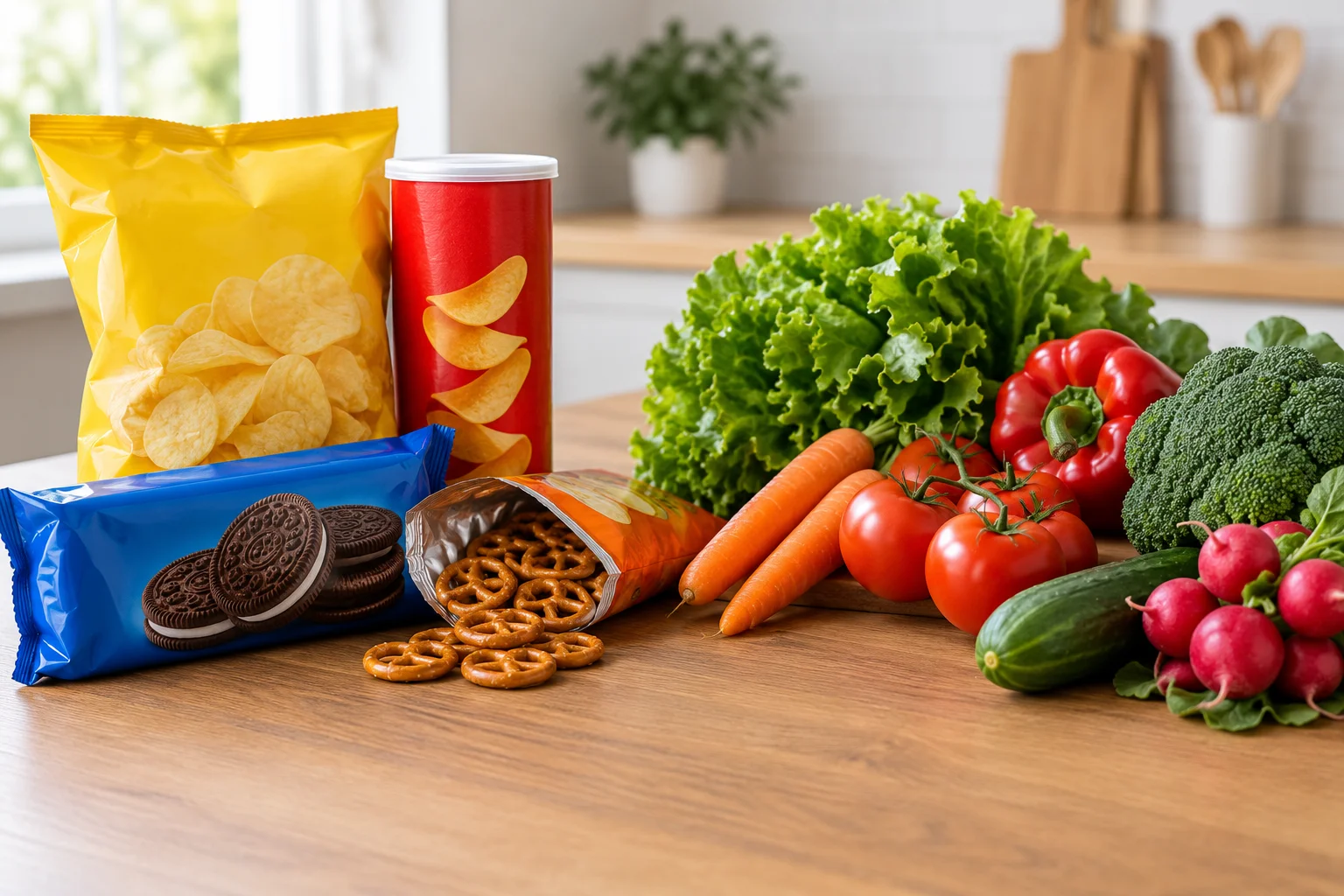
Common examples include:
- Soft drinks and other sweetened beverages
- Packaged breads and buns
- Sweetened breakfast cereals and snack bars
- Chips and other packaged snacks
- Instant noodles and many frozen meals
- Hot dogs, chicken nuggets, and flavored yogurts
In the U.S., these foods account for more than half of the calories adults eat. Research has linked higher intake to heart and metabolic disease, though observational studies like these can't prove that UPFs are the cause.
What the New Study Found
Researchers recruited 57 adults, most of them women, with an average age of 26 and a healthy average body weight. Thirty-two completed the main experiment, which used a randomized crossover design. That means each person ate both meals, on separate days, in random order, so everyone served as their own comparison.
After an overnight fast, participants ate a roughly 300-calorie meal, either ultra-processed or not. The meals were matched for macronutrients (carbs, fat, and protein), glycemic index, fiber, sodium, water, and energy density. For three hours afterward, the team tracked blood sugar and insulin and measured how much energy the body burned and what fuel it used.
Insulin is the hormone that helps move sugar from your blood into your cells. Here's what the researchers saw:
Blood sugar looked similar, but insulin didn't. Total blood sugar exposure was about the same after both meals. Insulin, though, was higher after the UPF meal at 40, 60, 90, and 120 minutes, before settling back to baseline by three hours.
The body burned fuel differently. After eating, the body normally ramps up its use of carbohydrates. That shift was stronger after the whole-food meal. After the UPF meal, the body burned relatively more fat and showed a weaker rise in carb burning. Total energy burned after the meal was also a bit higher in the UPF condition.
The researchers suggested the weaker carb-burning response might help explain the bigger insulin release. They also noted the pattern resembles aspects of altered fuel use seen in insulin resistance and type 2 diabetes. Insulin resistance means your cells respond less to insulin, so your body has to make more of it to do the same job. Importantly, the study didn't measure insulin sensitivity, so it can't say UPFs cause either condition.
Brain scans added another layer. People whose carb burning differed more between the two meals also tended to show different brain responses to pictures of UPFs and whole foods. That's an association, not proof that one drives the other.
What the Study Can't Tell You
This was a randomized trial, which is a strong design, and the meals were carefully matched. Still, the limits are real.
The group was small and unusual. Only 32 people finished both metabolic sessions, and just 29 were included in the analysis linking metabolism to the brain scans. They were young, mostly women, and at a healthy weight. People with obesity, prediabetes, or older adults may respond differently.
Processing wasn't the only difference. The two meals used different protein sources, ingredients, and additives. The researchers say that means food processing itself can't be pinned down as the sole explanation, and they didn't measure the foods' physical structure beyond fiber.
It tested single, small meals. A 300-calorie meal doesn't reflect a big dinner or a whole day of eating, and one meal can't show what happens over years.
No health outcomes were measured. The study didn't track overeating, weight gain, or disease. Whether short-term insulin differences add up to long-term problems is still unknown.
Why Might Processing Change the Response?
One idea is that processing changes a food's physical structure, which changes how quickly nutrients are released and absorbed. The researchers point to examples from earlier work: breaking down the cell walls of chickpeas leads to bigger rises in blood sugar and insulin, and certain starch treatments make carbs easier to digest.
Many solid UPFs are also designed to fall apart easily in the mouth. The study didn't test which features of processing were responsible, so this remains a hypothesis.
What Earlier Research Says
The new findings fit with a landmark trial from the National Institutes of Health. In 2019, 20 adults lived in a research unit and ate either an ultra-processed or an unprocessed diet for two weeks each, in random order. The meals offered were matched for calories, sugar, fat, fiber, sodium, and macronutrients. On the ultra-processed diet, people ate about 508 more calories a day and gained about 2 pounds. On the unprocessed diet, they lost about 2 pounds.
Clinical trials indicate, then, that UPFs can change how much people eat and how their bodies respond to a meal, even when the nutrition label looks the same. But these trials are short and small. Long-term studies are still needed to show what that means for disease risk.
What This Means for Your Plate
This isn't a reason to panic over every packaged food. The study doesn't show that a single UPF meal harms you, and the UPF category is broad.
It's a reasonable nudge to shift the balance. Build more meals around minimally processed foods like vegetables, fruit, beans, eggs, fish, plain yogurt, and oats. Check ingredient lists, and be wary of long ones full of unfamiliar additives. Fiber-rich whole foods also help with fullness; see our look at how fiber influences hunger signals. And since protein sources differed between the study meals, our guide to high-protein diets is a useful companion read.
If you're trying to lose weight or keep it off, appetite and metabolism matter more than most people realize. Our guides to sustainable weight loss, resetting a sluggish metabolism, and why weight comes back after dieting cover that side of the picture.
Should You Get Your Insulin Checked?
Doctors usually diagnose diabetes with fasting blood sugar and a test called A1C, which reflects your average blood sugar over a few months. A fasting insulin test isn't a routine part of that workup, and MedlinePlus notes that an insulin blood test isn't usually used to diagnose diabetes.
Some clinicians do order fasting insulin alongside blood sugar to look for early insulin resistance, and you'll need to fast for 8 to 12 hours first. Keep one thing in mind: this study measured insulin after a meal, which is a different measurement from fasting insulin. A normal fasting result wouldn't cancel out the findings, and an unusual one needs a doctor's interpretation.
If you have risk factors such as excess weight, a family history of diabetes, or blood sugar that's been creeping up, it's worth talking with your doctor. Our guide to the early signs of prediabetes explains what to watch for.
Clinical Evidence at a Glance
| Claim | Evidence Level | What Research Suggests |
|---|---|---|
| An ultra-processed meal raises insulin more than a matched whole-food meal | Randomized crossover trial (32 adults completed both sessions) | Insulin was higher from 40 to 120 minutes with similar overall blood sugar; short-term, young healthy adults, and the meals differed in ingredients |
| An ultra-processed meal shifts fuel use away from carbs | Same trial | Weaker rise in carb burning and relatively more fat burned; insulin sensitivity wasn't measured |
| Ultra-processed diets lead people to eat more | Inpatient randomized crossover trial (20 adults, 2 weeks per diet) | About 508 more calories a day and roughly 2 pounds gained, versus about 2 pounds lost on the unprocessed diet |
| Higher ultra-processed food intake is linked to heart and metabolic disease | Observational research | Consistent associations, but they can't prove ultra-processed foods are the cause |
| The body's carb burning is linked to the brain's response to food | Brain imaging within the same trial (29 adults analyzed) | Associations in reward and learning regions; no evidence of cause and effect |
The Bottom Line
Two meals with matching labels can still act differently in the body. In this small trial, the ultra-processed one triggered more insulin and a weaker shift toward burning carbs. That doesn't prove ultra-processed foods cause insulin resistance, overeating, or disease, and the meals differed in more than processing alone. Still, together with the NIH feeding trial, it supports a practical takeaway: more minimally processed foods, fewer long ingredient lists, and a closer look at your blood sugar if you have risk factors.
Frequently Asked Questions
What are ultra-processed foods?
They're industrially made products, typically with added ingredients like flavorings, emulsifiers, and sweeteners that aren't common in home cooking. Examples include soda, packaged snacks, instant noodles, and many frozen meals.
What is considered ultra processed food?
Under the Nova system, a food counts as ultra-processed when it's made through multiple industrial steps and contains additives or ingredients not typically used in home kitchens. Plain frozen vegetables, canned beans, and simple cheeses are processed less heavily and fall in different groups.
What are examples of ultra processed foods?
Soft drinks, sweetened breakfast cereals, packaged breads, chips, instant noodles, hot dogs, chicken nuggets, flavored yogurts, and many frozen dinners are common examples.
Are ultra-processed foods bad for you?
Research has linked higher intake to heart and metabolic disease, and a well-known NIH trial found people ate about 500 more calories a day on an ultra-processed diet. Observational studies can't prove cause, and the category is broad, so not every ultra-processed food is equally concerning.
Do ultra-processed foods raise insulin?
In a 2026 randomized crossover study, an ultra-processed meal triggered a bigger insulin response than a nutritionally matched whole-food meal, even though total blood sugar exposure was similar. The study was small and short-term, and the meals differed in ingredients.
Do ultra-processed foods cause insulin resistance?
That hasn't been shown. The new study didn't measure insulin sensitivity, and it looked only at single meals in young, healthy adults. Longer studies are needed.
Do ultra-processed foods raise blood sugar more than whole foods?
Not in this study. Overall blood sugar exposure was similar. Blood sugar rose faster after the whole-food meal, and it tended to stay up a little longer after the ultra-processed one, though differences later in the three-hour window weren't statistically significant.
How can I eat fewer ultra-processed foods?
Build more meals around vegetables, fruit, beans, eggs, fish, plain yogurt, and oats, and check ingredient lists for long strings of additives. Small swaps, like plain oats for sweetened cereal, add up without requiring a total overhaul.
References
- Hutelin Z, Ahrens M, Baugh ME, et al. Metabolic and neural responses to ultraprocessed foods: a randomized, controlled, crossover study. Nature Metabolism, 2026. DOI: 10.1038/s42255-026-01619-4. View study
- Hall KD, Ayuketah A, Brychta R, et al. Ultra-processed diets cause excess calorie intake and weight gain: an inpatient randomized controlled trial of ad libitum food intake. Cell Metabolism, 2019;30(1):67-77. View study
- Thomas L. Nutritionally similar meals might not affect your body the same way. News-Medical, October 8, 2026 (summary of the Nature Metabolism study). View article
- Ultraprocessed Foods Trigger Higher Insulin Response Despite Matched Nutrients. Medscape, October 9, 2026. View article
- Quantity and Quality of Evidence Are Sufficient: Prevalent Features of Ultraprocessed Diets Are Deleterious for Health. Advances in Nutrition, 2023. View article
- MedlinePlus. Insulin in Blood Test. View test information

The Health Findings Lab Research Team is a dedicated group of health writers, data analysts, and editorial reviewers. Operating under strict, evidence-based editorial guidelines, the team synthesizes peer-reviewed clinical literature to provide objective insights. Our collaborative approach ensures that every review prioritizes verifiable efficacy and manufacturing transparency over marketing hyperbole.